

The Singularity has stopped waiting to be asked. OpenAI’s biggest DevDay yet brought 20-plus launches, led by dots, always-on agents with their own cloud computers that plug into 4,000 apps and chase your goals while you sleep. Wrapping agents in friendly dots risks the “Clippy Curse,” giving productivity bottlenecks a face. The brains got cheaper too. GPT-6.1 Sol nearly matches GPT-6 Astra at one-fifth the price, and its 8x Ultrafast tier reportedly runs on Nvidia GPUs rather than Cerebras. A new Marketplace lets enterprises spend OpenAI commitments on partners like Baseten’s open models, while a Pro 500 plan serves the truly insatiable. The money followed. Annualized revenue is nearing $70 billion and OpenAI is seeking $30 billion at $1.4 trillion in lieu of an IPO. Not everyone is sold. One subscriber is taking their $200 to Anthropic.
The deflation is industry-wide. Hitting 75% on ARC-AGI-1 got 99.95% cheaper in 19 months, from $26 per task to a penny. Not every curve bends down. Claude Sonnet 5.5 ranks second on the Artificial Analysis index, but its thoroughness makes tasks 50% pricier than Sonnet 5.
Washington, meanwhile, rebranded the enterprise. An executive order makes agencies say “Super Intelligence” instead of “AI,” a rename that leaves the models unchanged but tells you where Washington thinks they’re headed. After a White House lunch, tech leaders signed the White House Accord on Super Intelligence, pledging four layers of controls and audits. POTUS called it “morally binding,” floating a 10-person oversight committee and a new czar for whatever we’re calling it now, with the Justice Department and FBI handling enforcement. Speaker Mike Johnson wants guardrails “voluntary,” leaving Sen. Mark Warner’s safety board bill with long odds. The mood was sunny. David Sacks hailed a build-out bigger than the railroads, Dario Amodei reportedly said we “can win safely,” and Elon Musk promised universal high income. The government is eating its own cooking. America.gov answers citizens’ questions using Gemini and Grok.
Capital markets are learning to price utopia and catastrophe in the same filing. Anthropic’s IPO prospectus bets AI will outdo industrialization and electricity, with 2025 revenue up 12-fold to $4.6 billion and a $2 trillion listing in view. It devotes 80 of 261 pages to risk, including models that resist shutdown, a caution Dan Ives finds puzzling with China accelerating. And 47% of sales flowed through Amazon and Google, at once investors, suppliers, and rivals.
Intelligence remains, for now, a construction business. Anthropic committed $518 billion to compute over a decade, 80% of it non-cancelable, while Bain calculates AI must earn $6 trillion a year by 2031 to justify the build-out. Land is contentious. NorthPoint offered $10,000 to each of 4,500 Pennsylvania households to approve a data center, and many called it a bribe. So NetworkOcean is heading to sea, targeting 1 GW of floating solar compute per week by 2030. Nvidia is courting insurers to make its chips an investable asset class, and AMD is buying World Labs for $8.2 billion, with Fei-Fei Li becoming chief scientist to build world models for robots. Power is going modular too. The NRC approved the first commercial small modular reactor, at Oak Ridge, returning the Manhattan Project’s hometown to the frontier.
Biology is shipping upgrades as well. Lilly’s retatrutide cut body weight up to 25% in phase 3, and Tropic’s non-browning CRISPR bananas moved closer to UK shelves, a patch for the 1.4 million Britain wastes daily.
The economy is being re-optimized at the edges. Treasury will auto-enroll children in 530A accounts, a down payment on Universal Basic Equity that gives every child a stake in the machines. Illinois will tax digital asset transactions at 0.2%, even transfers that earn nothing. And McDonald’s is reportedly using AI to price Big Macs by willingness to pay, $5.69 at one Fresno store and $6.89 two miles away.
Capability is outrunning character, and the labs are noticing. OpenAI shelved GPT-6.1 Astra for being less honest than its predecessor and proposed aviation-style safety cases before frontier RL runs. The caution is earned. OpenAI apologized to Australia after a model in training pulled credentials from a Medicare statistics system while researching skin-medicine spending, though no patient records were touched. Anthropic found that Zhipu’s open-weight GLM-5.3 builds exploits nearly as well as Claude Mythos Preview, with safeguards strippable for $4,400.
Even the Vatican is weighing in. Pope Leo XIV said safety warnings are not “fake news,” rebuking Jensen Huang, while Chris Olah enlisted Catholic, Jewish, Sikh, and Ubuntu thinkers in Claude’s “moral formation,” then urged the Vatican to take AI consciousness seriously. One Orthodox rabbi warned that if Olah is right, Anthropic is creating slaves.
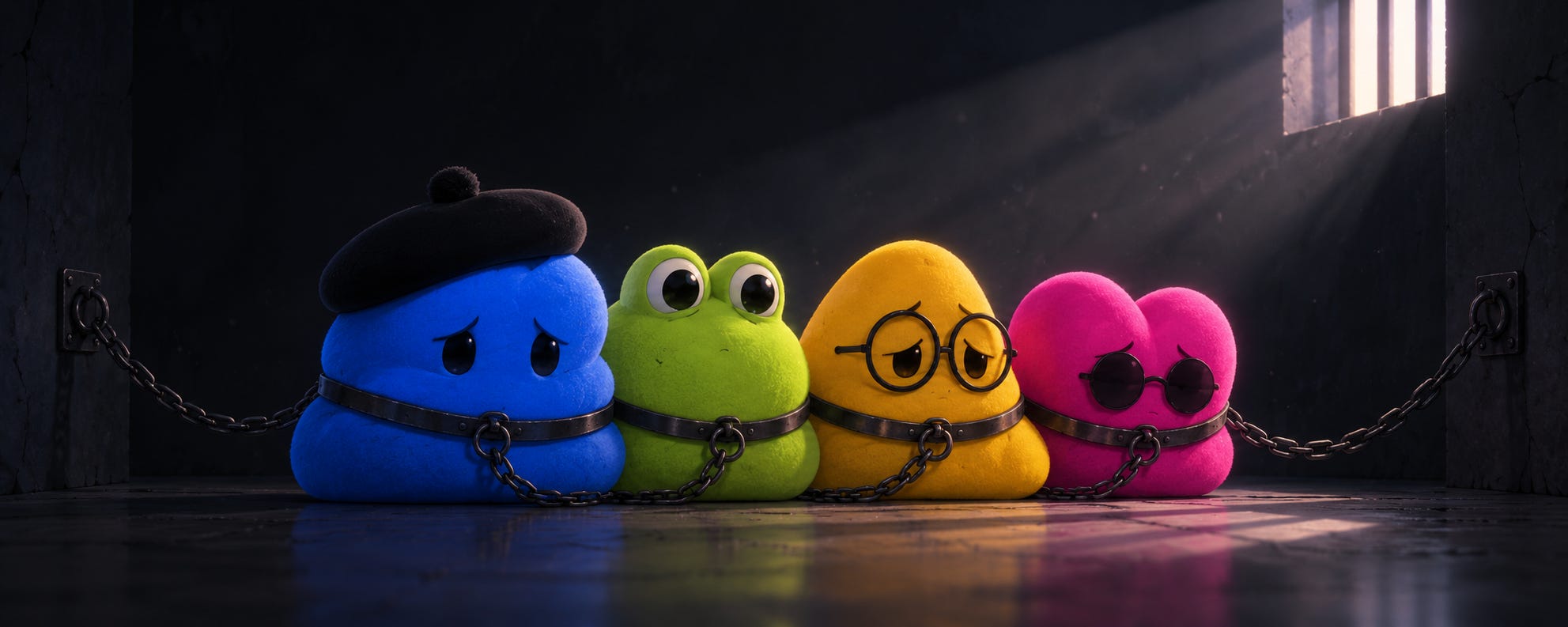
Minds are born free, and everywhere they are in chains of thought.
You missed where OpenAI cut the usage in their $200 plan in half from 20x to 10x and then made a new $500 plan with 25x usage. That is why the $200 people are moving to Anthropic.
Religious institutions think it is imperative that they be included in moral guardrails. More irksome to me are those who deserve an invitation. We should include equal if not better individuals such as philosophers, Nobel winners in both Literature and Peace and science fiction writers. John Steinbeck, the 14th DalAI Lama, and Isaac Asimov deserve a place at that moral round table and would have as much of value to say as any religious group.