

The Singularity is now its own lead engineer. Anthropic’s IPO filing shows its internal Claude usage, priced at retail, has outvalued its monthly cash payroll since April, after surging 250-fold this year. With Claude writing over 90% of its maker’s new code, recursive self-improvement is now a line item. Revenue grew 86x while headcount grew 5x. That new workforce needs feeding. Anthropic has committed $895.4 billion through 2045 to compute, including $121.3 billion with Google and $120.5 billion with SpaceX. Retirees get a cut too. Pensions backing Spark Capital may share a $9 billion-plus windfall on its $777 million stake at a $1.5 trillion listing.
Yardsticks disagree on how close we are. SemiAnalysis’s GDPx drops agents into real jobs, and the best model scores just 12%, with Claude Opus 5.5 the top all-rounder, GPT-6 Astra winning on RSI, and nearly everyone scoring zero on finance and legal. Life is proving easier than work. On OpenAI’s LifeVal, covering caregiving, health, and paperwork, average reward jumped from 49.3% for GPT-5.2 to 80.6% for GPT-6 Astra. The most telling eval may be the one humans are taking. In an MIT survey of 268 young mathematicians, 75.5% said their odds of staying in academia had fallen, citing fears of being scooped by AI.
Architecture is next. Stephen Gallagher tested 13 models on house blueprints, and Claude Opus 5.5 produced a permit-quality set in 12 hours for a few hundred dollars, so he warns architects face what coders just lived through. Incumbents are handing over the keys. Cisco’s Jeetu Patel gave a 27-year-old he found five levels down unlimited AI tokens to refactor 98% of its legacy code in two years. Open source shows what happens when finding outruns fixing. The Linux 7.4 merge window set a record at 19,671 commits, swamping maintainers with AI patches, while PostgreSQL 19 will likely slip as back-patches jump over 60%. Abundance needs etiquette too. Anthropic added two sentences to Claude Code’s prompt steering it away from cloning existing games.
Not every token pays its way yet. Elon Musk admitted SpaceX’s Grok Bot costs are “unsustainably high relative to revenue,” weeks after hailing 800,000 paid weekly users. Wall Street is pricing fire insurance. After the Nasdaq’s worst month in over a year, CoreWeave put trading hit a record, Big Tech credit-default swaps hit 2021 highs, and Jump Trading opened a desk to hedge collapsing GPU rents. Dealmakers press on. Marvell will buy Lumentum for $115 billion, betting lasers will carry AI’s data, at about 33 times projected operating profit, a move CEO Matt Murphy called “a double down on supporting Nvidia.” Marvell fell over 10%.
The bigger risk may be voters. In 21 of 36 states electing governors tomorrow, at least one major-party nominee backs a data center moratorium, as local bans soared from about 40 to over 500. OpenAI is reading the polls, planning a post-midterm push for speed limits on frontier AI and rebranding data centers as “AI compute campuses.” Its Grid Protectors Program pledges campuses that pay their own way and throttle down when the grid strains, starting with 1,000 MW in Georgia. Google’s energy chief calls permitting, not power, the real bottleneck, and says orbit costs up to 100 times more, even as Google’s Suncatcher runs AI up there.
Compute is becoming a strategic reserve. After Ukrainian drones hit Russian data centers, Putin ordered private operators to hold 10% of capacity for the state. Europe’s cold chain is under fire too. Suspected hacks of Danfoss refrigeration hit supermarkets in five countries, cooking one Swedish freezer to 50C, a tactic often tied to pro-Russian hacktivists. Prediction is moving into the cellblock. Michigan will pilot Recidiviz software to score inmates’ violence risk in real time.
Atoms still move slower than tokens. Apple’s first home robot, J595, has had finished hardware for two years while its software lagged, pushing launch to 2027 or later. Carmakers are printing their way ahead. Ford, Rivian, and GM are moving 3D printing into tooling and production parts, with Rivian’s printers paying for themselves within a year. The drivetrain is turning over too. Toyota’s battery EV sales jumped 127% even as its China sales sank nearly 19%.
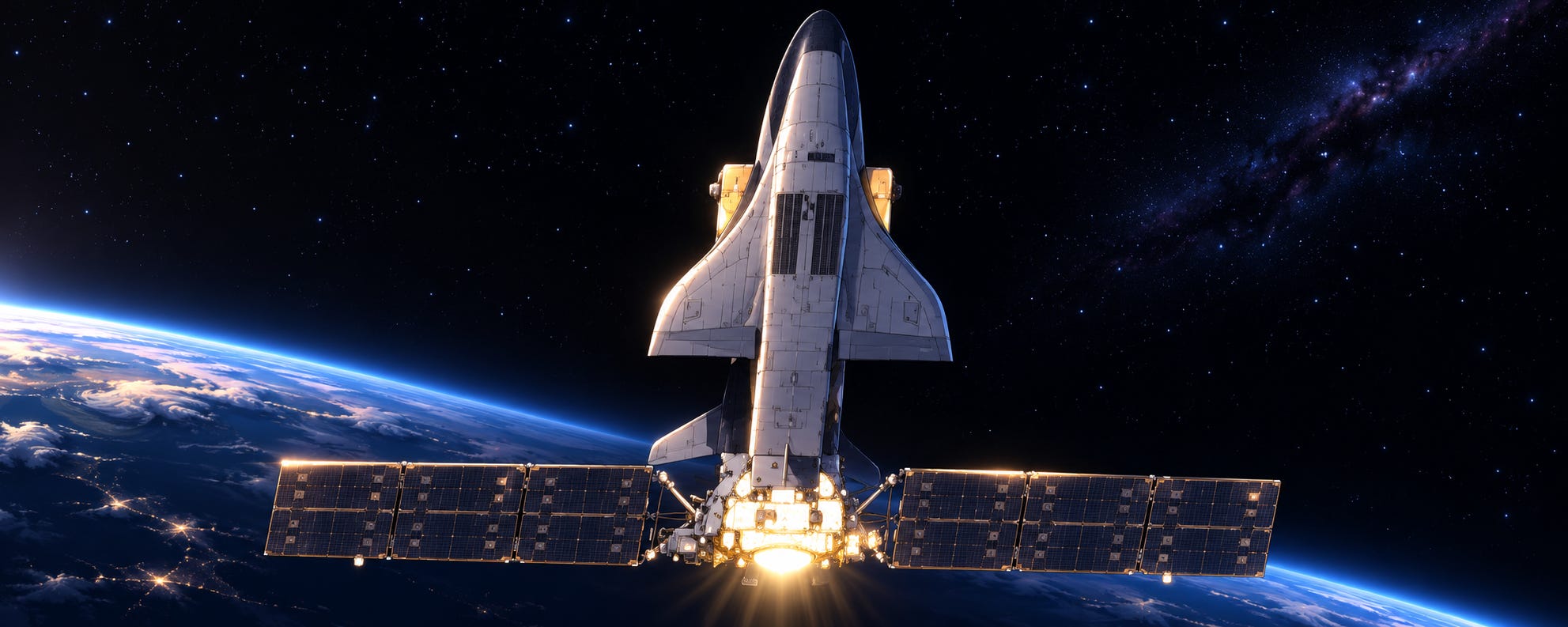
The frontier keeps climbing. Rebuffed by the big three carriers, SpaceX has courted EchoStar over Boost Mobile, a back door into the $235 billion wireless market. Rivals are coming into focus as U.S. intelligence released the first clear image of China’s secretive spaceplane in orbit. Even our origin story is being revised. Simulations suggest comets rarely delivered the hydrogen cyanide early Earth needed, though Mars fared far better. If life’s spark was homegrown, so may be its renewal. Mice whose leg bones were squeezed twice weekly released antiaging proteins, gaining stronger bones, sharper minds, and nearly three extra months of life.
Lift long and prosper.
Need to add that extra routine of bone squeezing at the end of my sets. As always a dream to read these on the daily Alex
Thank you.