
Welcome to May 18, 2026

The Singularity is learning to audit its own mind. Microsoft’s Nando de Freitas reports that “One line of code is all it takes to prevent LLM agent delusions,” by masking an agent’s past actions from its history so it stops mistaking hallucinations for memory. Better agents need better tools, and SpaceXAI launched Grok Build, an early-beta coding agent and CLI for software engineering. The frontier is no longer reliably American, as Chinese groups including ByteDance and Kuaishou have apparently overtaken the US in video generation, training on short-form libraries that advertising, ecommerce, and entertainment devour.
Cheap intelligence also means cheap noise. Bug bounty programs are drowning in AI-generated vulnerability reports, with Bugcrowd, whose clients include OpenAI and T-Mobile, seeing submissions quadruple in three weeks. Linus Torvalds concurs, calling the Linux kernel’s security mailing list “almost entirely unmanageable” under duplicate AI reports. Aimed with intent, that firepower is priceless, and Anthropic will brief the Financial Stability Board and central banks on real vulnerabilities its Mythos Preview model found in the global financial system.
AI is forcing institutions to swap proxies for the real thing. Stanford seniors report cheating is omnipresent, with 49 percent of surveyed CS majors saying they would rather cheat than fail, as a campus that banned proctored exams for a century now rebuilds assessment around what AI cannot fake. Memory is becoming a decision rather than a default. Apple’s new ChatGPT-like Siri app will reportedly auto-delete chats, while a Flock camera in Troy, New York just helped convict a man of manslaughter. Ephemeral where you want it, indelible where it counts. Even the friction is bullish, as students booed former Google CEO Eric Schmidt at the University of Arizona’s commencement the moment he raised AI, and Wired coined “the sad wives of AI” for partners holding the fort while someone mansplains the Singularity to them.
The hardware under all this is suddenly a sovereign asset. The President says the White House “should’ve asked for a bigger stake in Intel” beyond its 10 percent holding, after landmark deals lifted its stock over 300 percent. Apple found margin the opposite way, building a booming budget-device line from slightly flawed chips rivals discard. When silicon is the prize, there is no bad chip, only a cheaper one.
Powering and connecting that silicon is becoming geopolitics. Emboldened by its blockade of the Strait of Hormuz, Iran wants to charge tech giants for the subsea cables carrying internet and financial traffic, with state media hinting they could be cut if firms refuse. Electricity is the other chokepoint, and NextEra Energy agreed to buy Dominion for $67 billion, the biggest power deal ever, forming a colossus across Virginia’s data-center belt. Solar is infrastructure now, not décor, and Tesla is dropping its Solar Roof tiles for plain panels built in Buffalo.
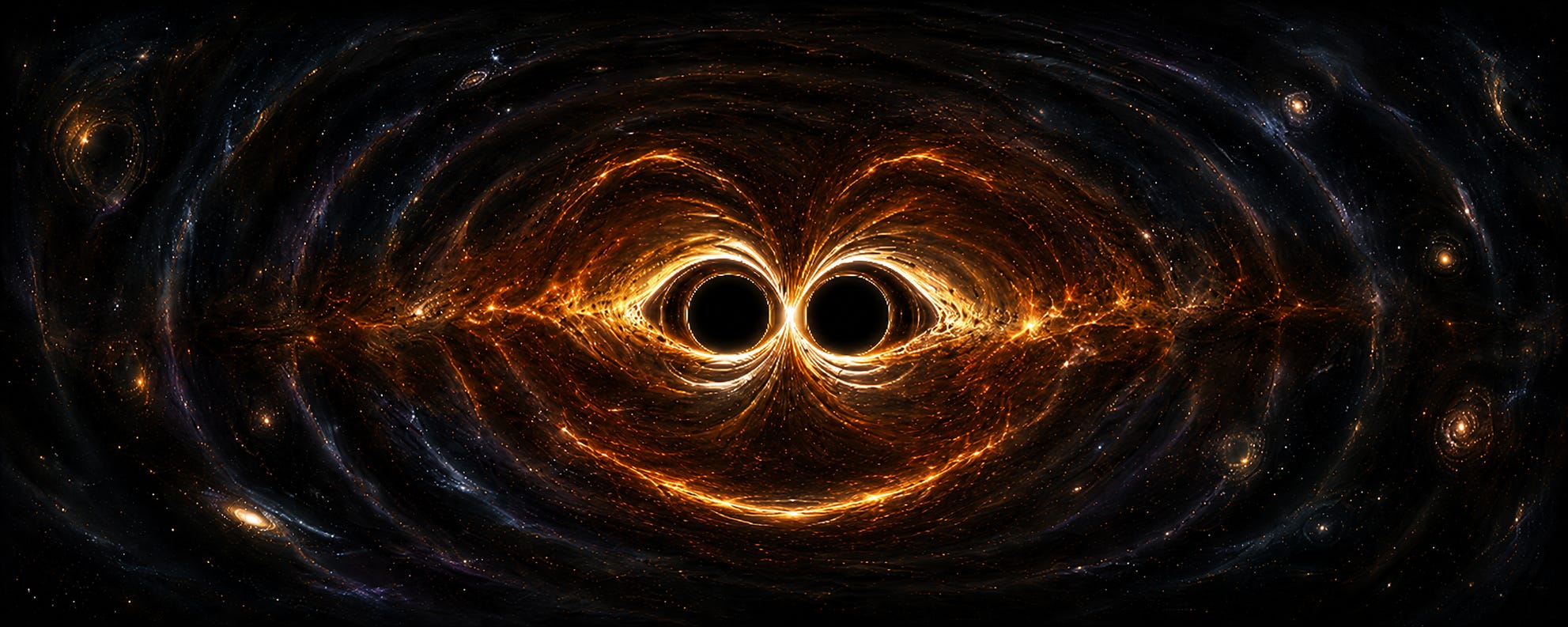
The robot can afford to lose, the human cannot afford to win. Figure’s human package sorter won by a slim margin, with his left forearm “basically broken,” and CEO Brett Adcock predicted “This is the last time a human will ever win.” Capital prices the future before it arrives, and SpaceX opened for trading on Hyperliquid’s perpetual futures at a $2.4 trillion valuation, the largest IPO in history, and Elon says Starship is built to lift over a megaton to orbit yearly. The universe’s books are getting audited, as astrophysicists found tentative evidence for ultralight scalar-particle dark matter near the GW190728 black hole merger.
Contact is increasingly a matter of testimony, versus telescopes. Even longtime UAP skeptic Neil deGrasse Tyson changed his tune on national news, arguing the question has shifted from “are we alone?” to “are we ready?” and citing sworn testimony from military and intelligence officials about recovered craft and bodies. The President leaned in, posting an AI-generated photo of himself walking a cuffed gray alien in leg irons.
The economy keeps repricing around the shocks. Leopold Aschenbrenner’s Situational Awareness fund disclosed 13F positions in Nvidia, ASML, Corning, and TSMC. Revenue is concentrating sharply, with Anthropic and OpenAI taking 89 percent of annualized revenue across 34 of the most mature AI startups. The courts cleared an old grievance, as a jury ruled against Elon Musk in his suit claiming Sam Altman broke a promise to keep OpenAI a nonprofit. Culture is archived even as it accelerates, with the Library of Congress “preserving a little piece of Hell” by adding the original Doom soundtrack to the National Recording Registry. And one quiet datapoint outweighs them all, as population records and Google searches tie the birth-rate plunge to the spread of smartphones.
Be fruitful and multiply-accumulate.
Thank you for work.
"Ultralight scalar-particle dark matter" refers to a model of dark matter consisting of very light bosons, typically with a mass around 10⁻²² eV, which behave more like waves than particles. This model is also known as fuzzy dark matter and can help explain certain cosmic phenomena that traditional dark matter models struggle with.