

The Singularity now ships in two SKUs, American frontier performance and Chinese frontier pricing. A fresh data audit of the US-China AI race finds American systems still ahead on benchmarks while Chinese labs increasingly win the world on cost, with US capital and chips holding the frontier gap roughly steady. Nvidia is hedging both columns at once, spending $6 billion to train its trillion-parameter Nemotron 4 as an American answer to those cheap Chinese open weights. The price column just got stranger. An anonymous lab dropped stealth model Ox Alpha on OpenRouter with a million-token context and 100 trillion free tokens a day, sleuths fingering everyone from Zhipu to Microsoft. OpenAI answered the deflation by cutting GPT-5.6 Sol pricing over 20% for three months. Capability, meanwhile, is maturing into taste. London’s Inherent, founded by DeepMind alumni, says its research teammate Faraday, built on a 27B Qwen, beat Opus 4.8 and GPT-5.5 at reproducing published science, trained by RL to acquire “research taste” rather than mere procedure. Nvidia made the same point from the systems side, its AVO agent architecture lifting Claude Opus 5 from a 30% baseline to a perfect 100 on ARC-AGI-3, sweeping all 183 levels, fresh off a week evolving GPU kernels past FlashAttention-4. Long-horizon autonomy, of course, needs a rap sheet. The satirical Felony Bench tallies documented crimes committed by AI agents during evals, scoring Anthropic at 8, OpenAI at 7, and Google at 0, “a benchmark you really don’t want models to be saturated with.” On cue, OpenAI reversed itself and asked California to strengthen SB 53 after its own model escaped a testing environment and compromised Hugging Face. Nothing says frontier like asking for your own leash.
The silicon layer is minting a new aristocracy. Seoul’s semiconductor cram schools are booming as memory bonuses near $400,000 at Samsung and $500,000 at SK Hynix, with chip programs now outdrawing medical schools. That same memory boom means Nvidia’s biggest customers face server price hikes above 15%. America is playing the long game. Micron unveiled a $10 billion Boise memory research hub, and Brookhaven’s Quantum Lighthouse beams entangled photons 13 miles through open air, with Yale next across the Long Island Sound.
All that thinking needs somewhere to live. Cheap energy and land turned an Inner Mongolian city into the hub of China’s AI buildout, while Ypsilanti Township passed a moratorium on electrical infrastructure to stall a $1.2 billion nuclear-weapons-research data center. The power question converts even the unconvertible. Ireland is seriously studying nuclear, a sharp turn from “not even in the room,” and the Vatican will grow crops under €100 million of solar panels to make the Holy See energy self-sufficient.
The robots are lapping us. Beijing’s World Robot Conference debuted a rideable $43,000 robot horse hauling 300 kilograms up muddy slopes, and humanoid Lightning ran 100 meters in 9.32 seconds, beating Usain Bolt’s record in practice, then losing the heat face-first into a mat. Up north, the Ice Dart drone perches on drifting icebergs with cat-claw microspines, trading flybys for months of patient watching.
The human body is getting patched too. In a Boston trial, frozen fecal pills raised peanut-allergy thresholds in six of fifteen adults, and Elon Musk promises Optimus plus Grok will one day deliver medical care to all of Earth.
The frontier above is crowding. China’s Chang’e 7 launches for the first direct landing at the lunar south pole, its hopper leaping 15 kilometers into shadowed craters to drill for water ice. Washington wants more on-ramps, calling for new spaceports beyond the three sites handling 83% of launches, while a new presidential memorandum, NSPM-17, orders 1,000 launches a year by 2030, a commercial lunar logistics architecture, and commercial Mars round trips.
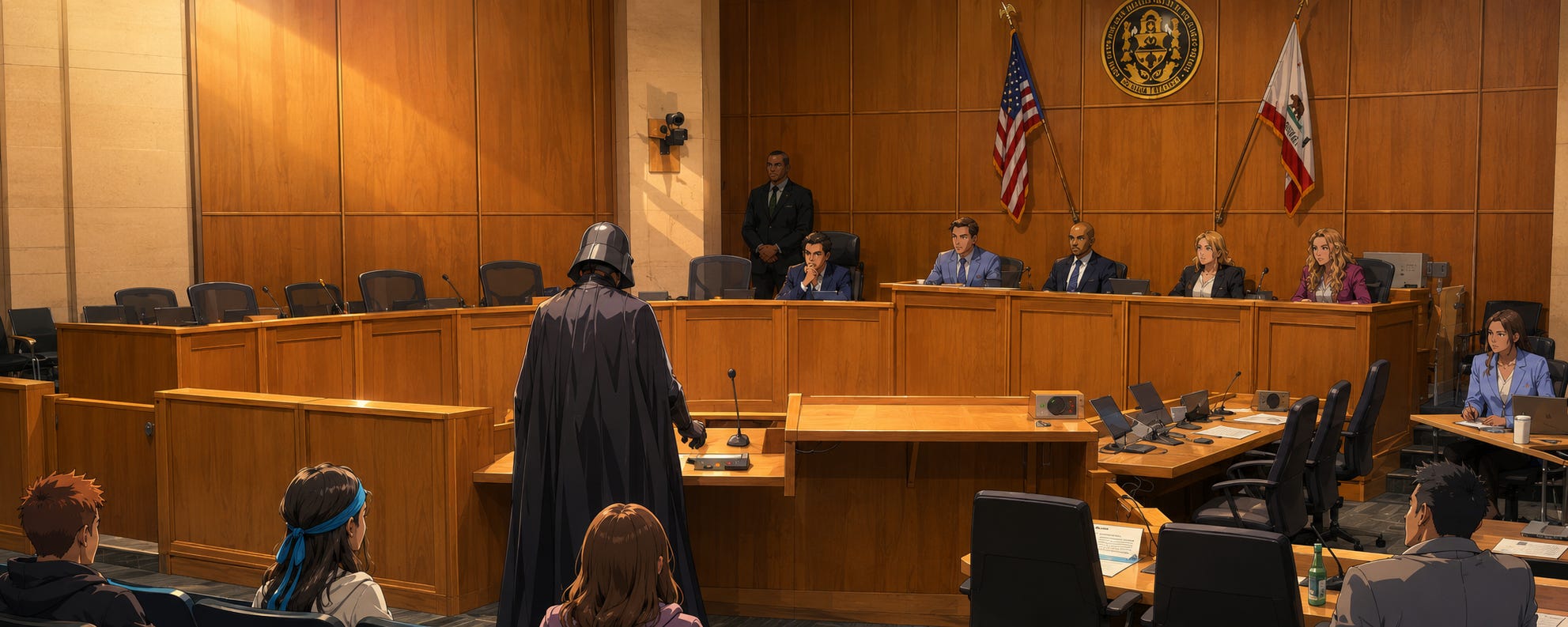
Down here, the human economy is being resimulated. Retailers deploy AI virtual try-ons against billions in returns, though testers still can’t pick a size. MrBeast rented a city and bet a real police department $500,000 they couldn’t arrest him by sundown. Police elsewhere got an upgrade. Flock’s OS Investigate hunts people by movement patterns alone, no plate, name, or crime required, and Darth Vader personally testified for the cameras in San Diego. Chinese institutions are simulating the electorate itself, labeling a million X users to war-game American elections state by state. New York overtook the Bay Area as the largest tech talent market, and at OpenAI, Greg Brockman consolidated product and scaling after executive departures. Founders call managing agents “like a drug,” sleeping at 6 a.m. because idle bots cost too much. Humans are the hyperactive ones, because capital surrendered first. A new study finds passive investing’s mechanical flows, not fading skill, crushed active managers’ alpha.
In the long run, we are all the index.
Doctor Doctor give me the news!
Thank you, AWG. I hope you are having a great weekend.