

The Singularity now has a financial definition. As one observer realized this week, it just means capital flows so vast that any bottleneck becomes a point of infinite arbitrage, competed away instantly. He plays that forward to an endgame of terawatts of compute in orbit, making particle beamlines for radiation-testing chips the next chokepoint. The arbitrage is already visible. First silicon numbers show Vera Rubin NVL72 generating up to 10x more tokens per megawatt than Blackwell. Megawatts being scarcer than money, buyers are stripping engines off private jets to power data centers, a trade Caterpillar, Cummins, GE Vernova, and Siemens Energy are racing to supply. Where megawatts land, wealth follows, or perhaps precedes. The two richest US counties are also the top two data center counties. Even externalities are being arbitraged away. SpaceXAI will recycle 10 million gallons of Memphis water daily, ending its aquifer draws, and Malaysia’s chip-packaging and data center boom lifted GDP growth to 6% despite protests over energy and water. Capital keeps compounding, with Nvidia weighing $3 billion for SB Energy’s Ohio campus serving OpenAI.
Open weights have gone east. Qwen logged over 3 billion downloads in six months, lapping Google’s 418 million and Meta’s 227 million. A summer census of the open-model ecosystem shows the lead runs deep. Chinese labs topped US releases nearly every month, Qwen is the default base with 151,448 derivatives, US open source retreated to hardware vendors, and agents, Claude Code alone at 44.4% of their traffic, became Hugging Face’s largest class of user. When models commoditize, data turns to treasure, so labs’ contractors now cold-email startups to buy their old Slack threads and support tickets, one offer landing eight days after its target agreed to sell. Provenance cuts both ways. Future Claude models will carry an invisible watermark that only tweaks the randomness between equally good words, traceable to no one, satisfying the EU AI Act.
Science itself is becoming a benchmark. Faraday, a 27B “AI Scientist” trained to reproduce figures from papers it never saw, beat Opus 4.8 and GPT-5.5 in every category while wielding a bigger coding agent as its tool. In 153 autonomous runs on the nanoGPT speedrun, eight days each, Claude Fable 5 closed 81.7% of the gap to the human record, though no run invented a new method. Sometimes one does. An auto-research loop found a 232x kernel speedup on a QR decomposition problem. Days after ten open math problems fell, Timothy Gowers argued LLMs shine at search-heavy proof discovery, where breadth and cheap exploration rule, while humans still prune deep trees best.
Capability is abundant, trust is the bottleneck. Dario Amodei rejected charges of doom-mongering, arguing public pessimism is a decades-old trust crisis and that “the thing that will work is actually curing cancer,” not marketing. On regulation, he called capture-versus-distribution a false choice, noting Anthropic’s proposals deliberately slow frontier labs and exempt challengers. The bias problem is structural too. Prompts with linguistic features more common among women elicit measurably worse responses, encoded in early layers, stronger than any explicit gender cue.
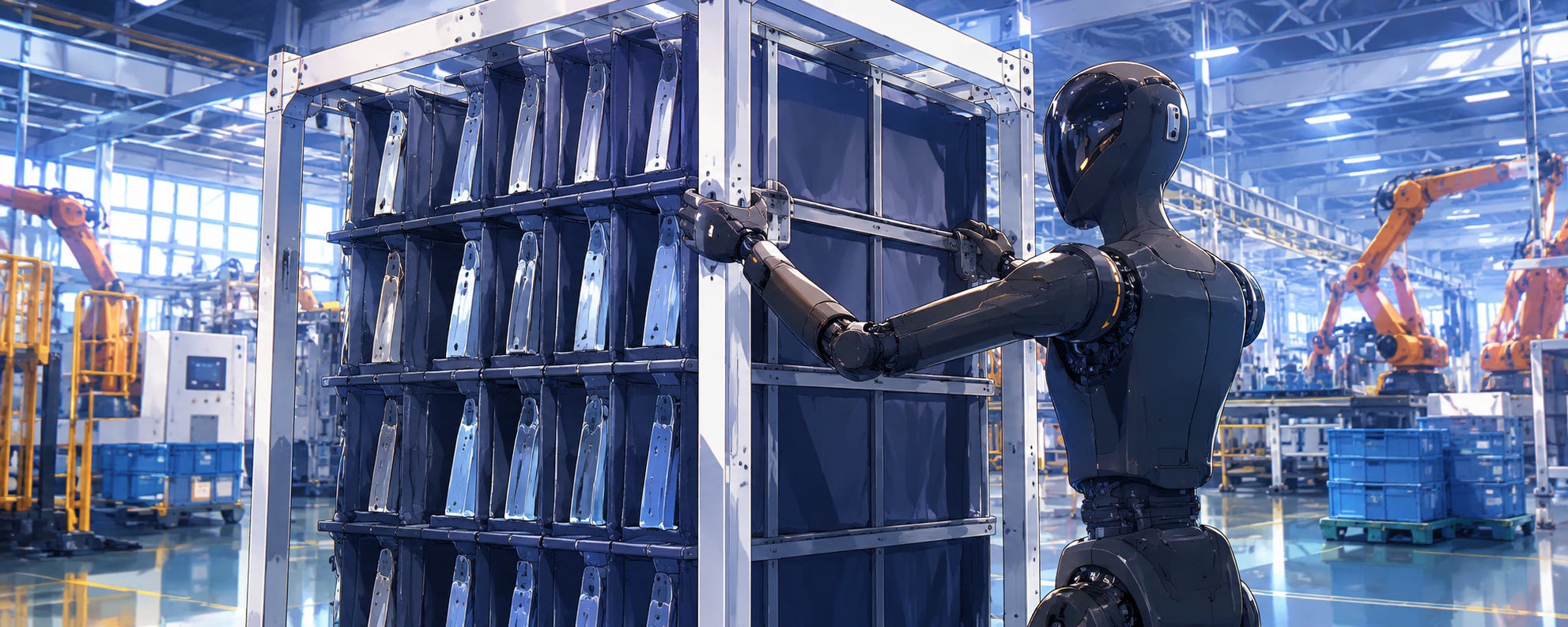
Atoms are catching up to bits, and regulators to atoms. San Mateo County drafted the strictest US humanoid permitting regime, with on-site supervisors and automation fees that break teleoperation economics, just as BMW, Hyundai, Mercedes, and Tesla test humanoids on factory floors, still slower than humans, improving fast.
Overhead, cadence is the product. SpaceX launched twice in 38 minutes, a record, and Firefly won a contract to deorbit dying satellites, janitorial service for the swarm. Deeper out, Webb spotted a “black hole star,” a solar-system-sized object radiating 100 billion suns 660 million years after the Big Bang, perhaps explaining the early universe’s little red dots. At the opposite limit, Fudan built a superconductor one atomic plane thick, trading 10% of transition temperature for an uncharted phase diagram.
Biology is shipping consumer products. A $50 at-home tick test flags Lyme bacteria in 15 minutes, and semaglutide damped a proteomic dementia risk signature in the SELECT trial’s afterglow.
The economy is metabolizing all this unevenly. Firms rationally over-automate, a new model shows, since each keeps the savings but shares the demand loss, a trap only a Pigouvian automation tax escapes. Tech bosses keep publishing abundance manifestos, Zuckerberg’s 6,500 words the latest, while inside the labs the promised four-day week became 70-hour baselines. 84% of Chinese respondents are excited by AI against 38% of Americans, a gap driven less by risk than by who expects to share the gains. And Congress now runs on chatbots, one amendment hitting the record with a Claude timestamp still attached.
Government of the people, by the models, for the Singularity.
Possibly "unenthusiastic" Chinese respondents get a visit from the police, and everyone else is more careful about being seen as critical of the glorious Ai future with Chinese Characteristics?
Seriously - with Chinese young people having trouble finding work, let alone work that pays a living wage, many workers not getting paid for months and then seeing their company shut down, and the primary use of Ai the Chinese people encounter being the constant monitoring of anything they post online - why would anyone believe this '84% excited' statistic is truly representative?
I'm fairly positive on Ai's long term effects - but I'm concerned near term for US jobs, and I'd expect things to go even worse for Chinese workers.
"84% of Chinese respondents are excited by AI against 38% of Americans, a gap driven less by risk than by who expects to share the gains."
Probably true.