
The First Dyson Swarm Node

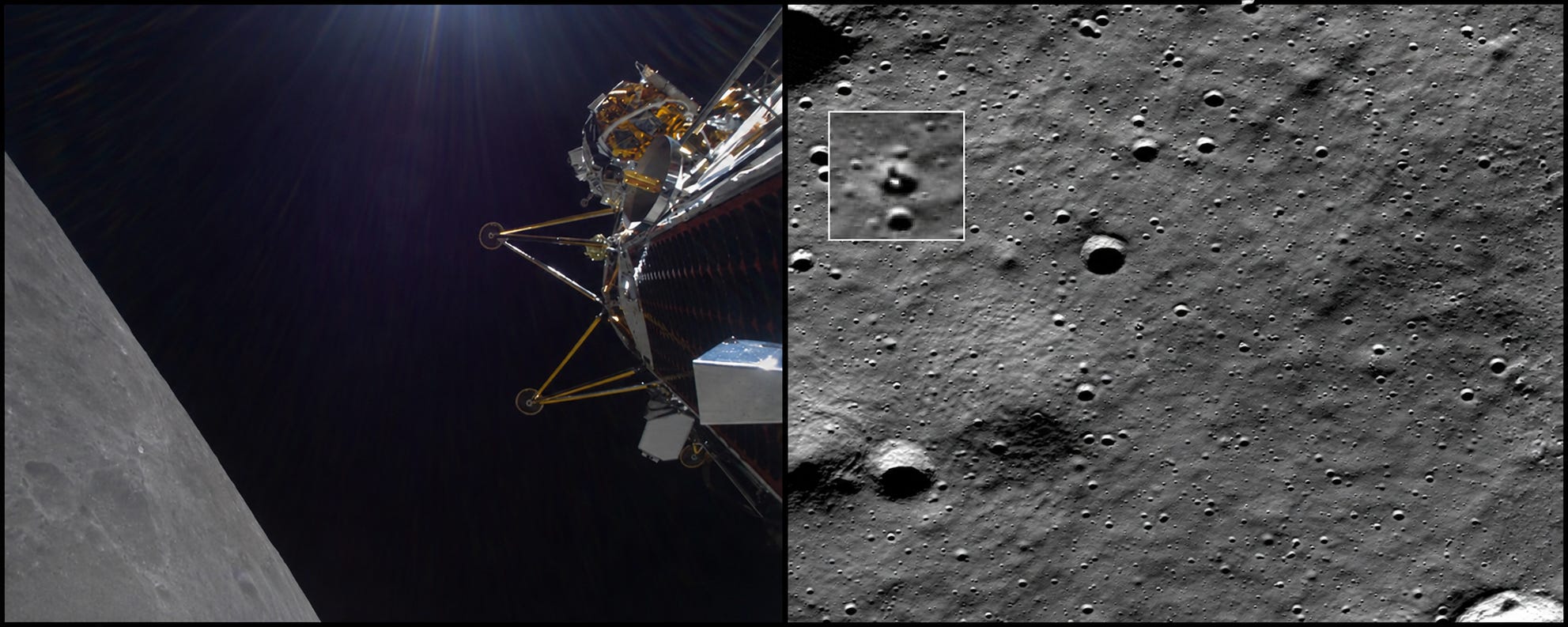
The Singularity’s apparent agenda includes putting the Solar System’s matter and energy to their highest use — thinking — culminating in a Dyson Swarm of compute nodes around the Sun, but that objective has remained distant, until now.
When Freeman Dyson popularized the idea in 1960, he imagined surrounding a star to capture its energy, later clarifying its form as a swarm of orbiting objects rather than a shell. In the AI age the objects are data centers, sun-powered compute that makes inert matter think, floating where Earth’s disasters cannot reach. The swarm is assembled one node at a time, outward from home, and its leading edge is defined by a single number, how far from Earth the compute actually runs.
By that measure, the lead builder of the Dyson Swarm already exists: Lonestar Space. Today, I can share that I’m advised 021T Capital has backed it.
The swarm’s contenders are all “Stars.” SpaceX’s Starlink carries bandwidth, its newly named Starmind plans to fly compute in 2027, and Starcloud has flown a single GPU, all in low Earth orbit, a few hundred kilometers up. For all the attention on Starlink and Starcloud, one “Star” never announced itself. Quietly, the “Lone Star” has gone the distance, operating compute, storage, and bandwidth to the lunar surface, 300,000 kilometers from Earth. It is the only “Star” beyond LEO, let alone on the Moon.
It did not start there. Lonestar’s firsts begin in low Earth orbit in 2021, where it flew the first software-defined data center in space and the first aboard the International Space Station. It was the first to retask on-orbit compute rather than fly new, running on Made In Space‘s ISS 3D printer, and the first to test disaster recovery from space. Lonestar’s payload hosted the first AI-generated artwork and the first cryptocurrency created in space, Celestium. Lonestar filed the first commercial lunar spectrum claim at the ITU, and built the first lunar mission control east of the Mississippi, on software it wrote itself.
Then it went to the Moon. In February 2024, aboard Intuitive Machines‘ Odysseus, Lonestar flew the first software-defined data center to the lunar surface and was the only commercial payload that worked, even after the lander tipped over. It transmitted the Declaration of Independence up for storage and the Constitution and Bill of Rights back, the first disaster-recovery data moved to and from the Moon, on America’s first return to the lunar surface since Apollo 17 in 1972.
Lonestar’s 2025 follow-on carried purpose-built hardware and the densest firsts yet. The first solid-state drives to the Moon, eight terabytes, nearly seven million times the storage of all nine Apollo missions combined. The first RISC-V flight chip, a PolarFire processor with roughly twenty thousand Apollo 11 guidance computers‘ worth of power. It ran continuously through cislunar space and thirty-nine lunar orbits. It held disaster-recovery data for eight governments including Florida, computed the first knowledge graph off Earth with Valkyrie Intelligence, and carried the first 3D-printed lunar structure, a Bjarke Ingels casing built for a thousand years.
This is what the leading edge of a Dyson Swarm looks like before anyone calls it one. Not a hard drive in space, but the full stack at lunar distance, compute that processes, storage that holds it immutably, and the bandwidth to move it across deep space, proven by the first Delay Tolerant Network test for Vint Cerf‘s Interplanetary Internet and the first Earth-to-Moon data fabric, with Flexential. This is operating heritage no balance sheet can buy. Compute in low Earth orbit is racing to commodity pricing; Lonestar holds the premium, sovereign tier, uncontested at its distance, with the pricing power that scarcity confers. Demand is already here. Eight government customers, prior payloads sold out, and a $120 million agreement with Sidus Space to build the L1 constellation.
The deepest waste is a Solar System of matter and energy sitting idle, computing nothing. As novelist Charlie Stross put it, “If it isn’t thinking, it isn’t working.” A Dyson Swarm is how dead mass and sunlight are made to think. Its first node has already been deployed on the Moon.
You can learn more about Lonestar Space at lonestar.space.
(Disclosure: I have a financial interest in 021T Capital. This post is informational only and not investment, financial, legal, or regulatory advice, and nothing here is an offer to sell or a solicitation to buy any security. The accomplishments, mission details, customer counts, and performance figures described were provided by Lonestar and other third parties, have not been independently verified, and are presented without any representation or warranty as to their accuracy or completeness, and the author assumes no liability for errors or omissions. Forward-looking statements about future missions, demand, and capabilities are subject to risks and uncertainties.)
"Now, that's a moonshot, ladies and gentlemen."
😊 thank you.